ChargeSouth Verdict: The host nailed it. V4 stalls, a clean lot, food and restrooms a few steps away, and a charge that started without a fight. The problem is upstream: Tesla's in-car charger list buries host-owned Supercharger for Business sites underneath every Tesla-owned station in the region. Great station, bad discoverability — and only one of those is fixable by the store.
The Site
A c-store owner did what the big networks keep talking about
There is a version of the charging build-out that everyone in this industry says they want: local fuel retailers, the ones who already know how to run a clean restroom and sell a hot biscuit at 6am, adding DC fast charging to lots they already own. Less permitting drama, no greenfield land deal, amenities already in place. It gets described at every conference. It doesn't happen nearly often enough.
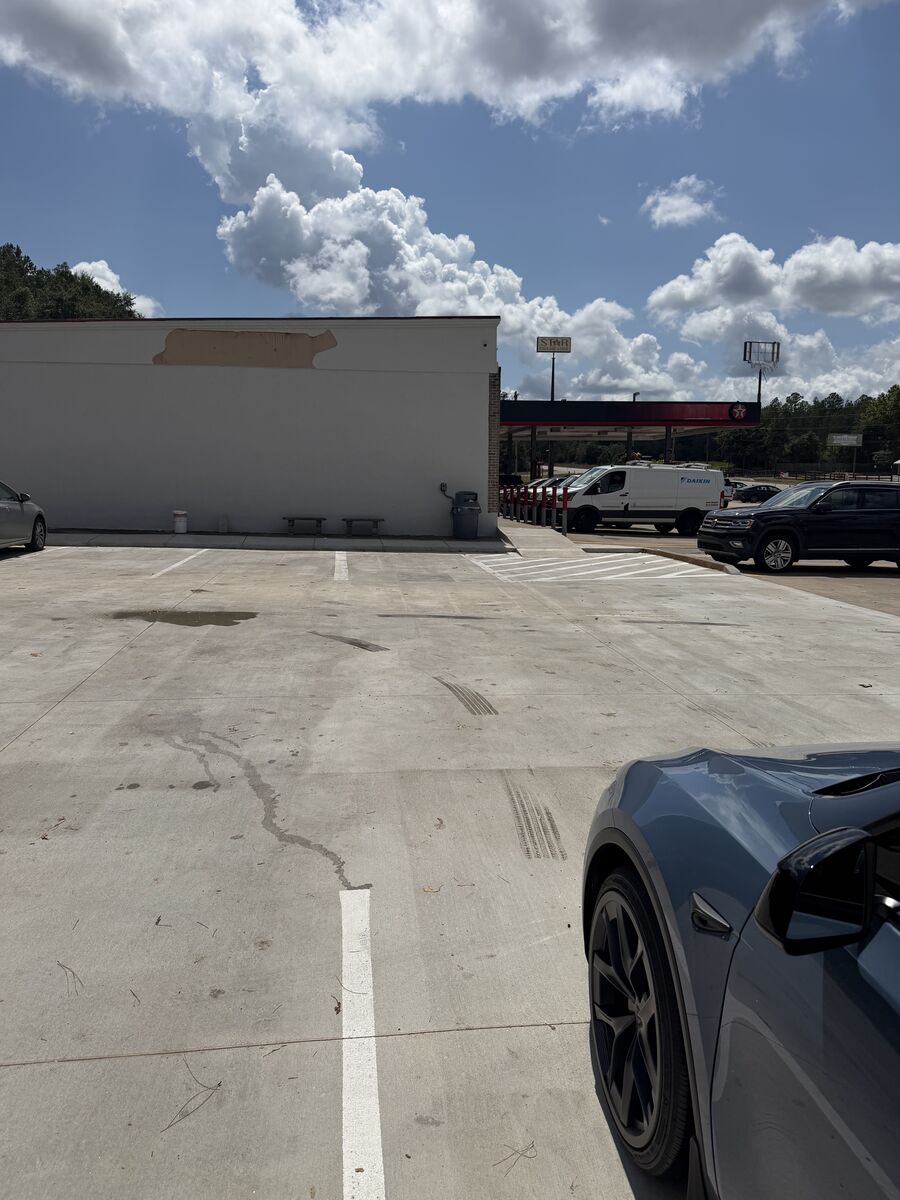
It happened in Prattville. The stalls sit on the lot of an independently owned Texaco station just off the highway, on a fresh concrete pad set behind the store — separate from the fuel canopy, with the package store next door and a Chevron visible across the road. This is not a corporate network site with a national brand on the pylon. This is a private operator who looked at the traffic going past, looked at the number of EVs in it, and wrote a check.
The Hardware
V4 posts, one cabinet, no drama
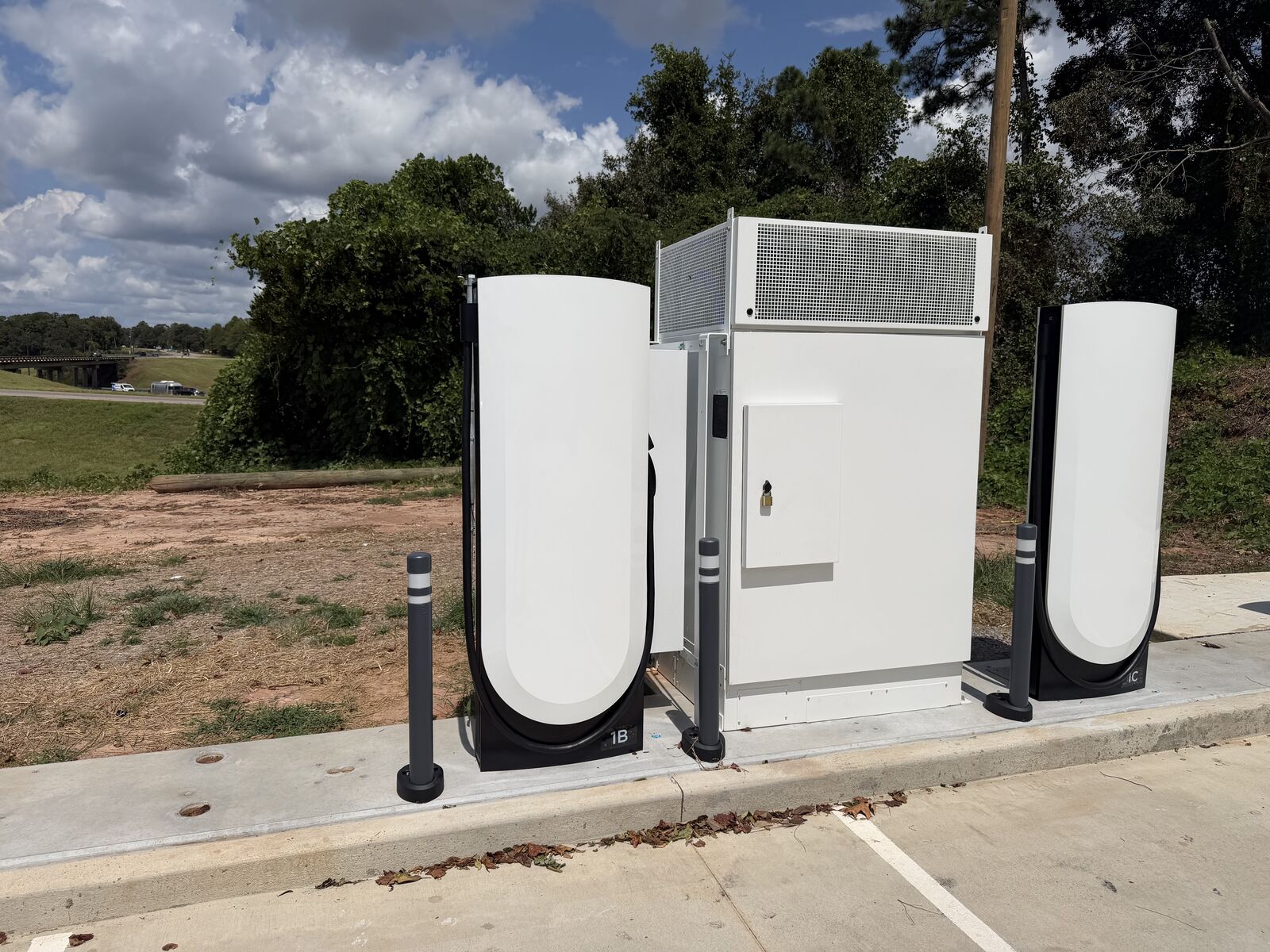
The install is Tesla's current V4 post design — the tall, slim white pedestals with the cable looped down the side — fed by a single cabinet sitting in line with the row. The posts we photographed are labeled 1A, 1B and 1C, which tells you the shape of this thing honestly: it is a compact site, not a twenty-stall corridor plaza. That is the right call for a store this size, and it is how most host-owned sites should start.
Everything about the physical build reads as done properly rather than done cheaply. Fresh concrete, painted stall lines, bollards protecting each post, curbing that keeps traffic from clipping the cabinet, and enough pad depth that a truck can pull in without a three-point turn. Nobody value-engineered the bollards out of this job.
The charge itself was a non-event, which is the highest compliment you can pay a fast charger. Plug in, session starts, no app, no card, no calling a support number printed on a sticker. Host-owned or Tesla-owned, the billing and authentication ride on the same account, and the driver experience is identical. That consistency is the genuinely good part of the Supercharger for Business model, and it worked here exactly as advertised.
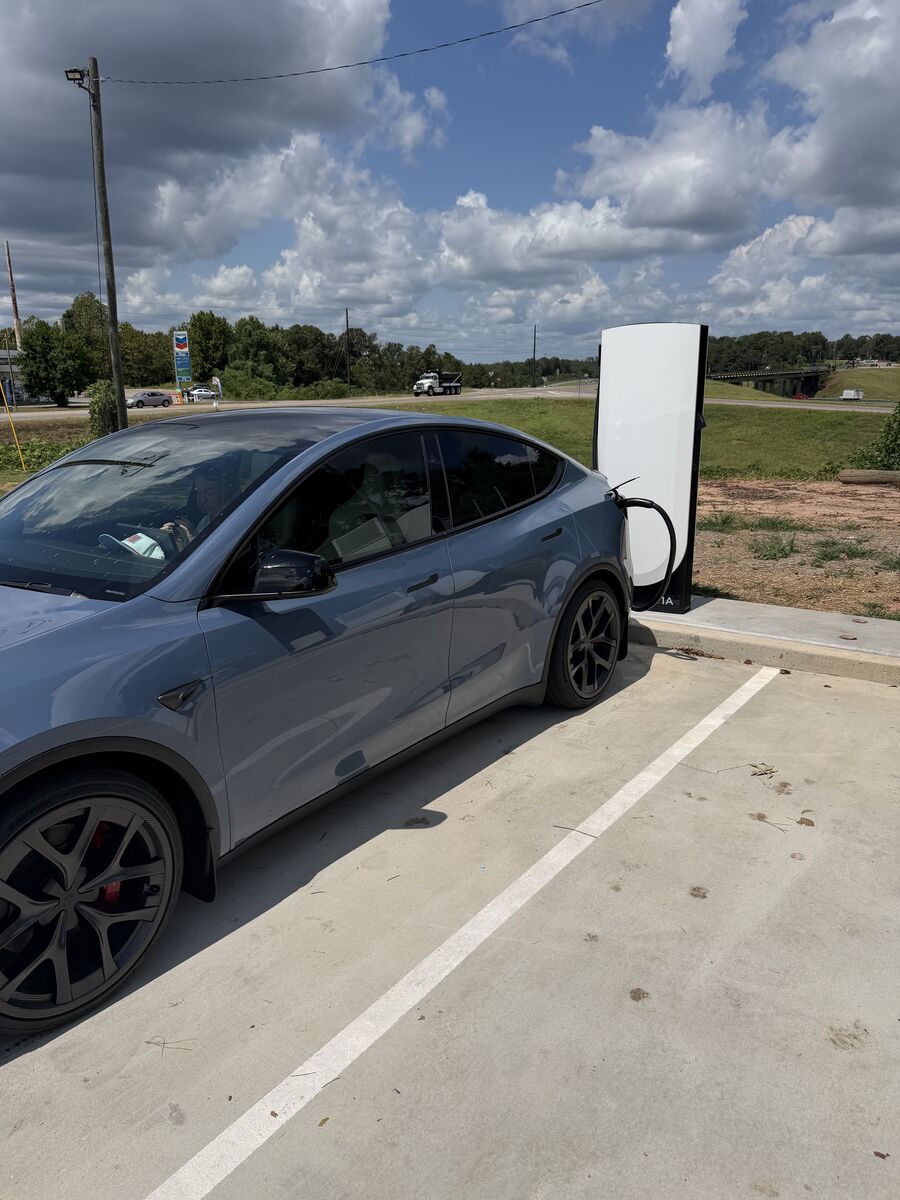
"The charging worked great and the store had food and restrooms. On a road trip that is the entire assignment, and this site passed it."
The Problem
Forty miles of scrolling to reach a station eight minutes away
Here is where the review turns, and it has nothing to do with Prattville. Pulling up the charger list in the car, this station was not near the top. It was not in the middle. Getting to it meant scrolling past effectively 40 miles of Tesla-owned Superchargers first — stations considerably farther away, listed considerably higher. If a Tesla-owned site exists anywhere in the general vicinity, the car steers you toward all of those before it mentions the host-owned one down the road.
That is a routing and ranking problem, not a hardware problem. The stalls are the same V4 posts. The pricing shows up the same way. The session bills to the same account. But a driver on a schedule does not scroll. A driver on a schedule takes the first plausible entry on the list, and the list is not sorted in the way that driver assumes it is.
✓
Charge worked first try
✓
Food & restrooms on site
~40 mi
Of stations listed first
Buried
In-car discoverability
Why It Matters
A host who fronts the capital needs the cars to show up
Think about the deal from the store owner's side. They paid for the pad, the conduit, the service upgrade, and the equipment. Their return depends on one number: sessions. Every driver who scrolls past this station and stops at a Tesla-owned site instead is a coffee, a bag of chips, and a restroom visit that did not happen at a business that spent its own money to earn it.
Now multiply that by every convenience store operator in the South watching to see how Prattville does. Host-owned charging is exactly how coverage reaches the towns that corporate site-selection models skip — the exits with one traffic light and no interstate-scale traffic count. Those sites only get built if the first movers make their numbers. When the in-car list systematically favors company-owned locations over host-owned ones, the platform is quietly competing with the partners it recruited.
"If the car pushes drivers to Tesla-owned stalls over the privately owned ones, Tesla is competing with its own customers."
The Fix
Four changes, none of them hardware
None of this requires a construction crew. It requires software decisions about how a list gets ordered and what the trip planner is allowed to consider.
| What happens now | What should happen |
|---|---|
| Host-owned sites rank below Tesla-owned sites much farther away | Rank by distance and detour cost, regardless of who owns the stalls |
| Nearby host sites can be missed entirely on a long list | Surface the closest few stations first, then everything else |
| Trip routing gravitates to company-owned stops | Include host-owned sites in navigation suggestions on equal terms |
| No easy way to prefer a local station you like | Let drivers favorite a site and have routing respect it |
To be clear: none of this is the host's fault. The Prattville site did everything within its control correctly — good hardware, protected stalls, working session, amenities open and clean. The discoverability problem sits entirely with the platform.
Pros & Cons
What Works
- Current-generation V4 posts, not aging hardware
- Charge session started without any fuss
- Food and restrooms steps from the stalls
- Well-built pad — bollards, curbing, clean striping
- Privately owned, which is how rural coverage actually gets built
What Doesn't
- Buried in the car's charger list behind distant Tesla-owned sites
- Routing pushes drivers toward company-owned stalls
- Compact site — a handful of stalls, so timing matters at peak
- Easy to drive past without knowing it exists
- Nothing the host can do about any of the above
The Bottom Line
Go out of your way for this one. You'll have to anyway.
This is the kind of site the South needs more of: a local operator, an existing lot, current hardware, and amenities that were already good before the chargers showed up. It is genuinely encouraging to see a privately owned c-store make this investment, and the execution deserves credit — the charge worked, the store delivered, and nothing about the visit required a support call.
The asterisk belongs to the platform, not the host. When a station eight minutes away sits below dozens of stations far outside your detour range, the ranking is working against both the driver and the business that paid for the stalls. Tesla should fix the sort order, and until it does, the practical advice is simple: if you are running I-65 through Prattville, know this station is there and go find it on purpose.
Alabama
Prattville
Supercharger for Business
V4 Hardware
In-Car Routing